Wednesday, February 25, 2009

Manhattan Project

THE MANHATTAN PROJECT.. (ATOMIC BOMB)


The manhattan project was a secret project that was established before WWII and culminated in the development of the Nuclear Bomb. it was so seceret that not even the vice president know about it.


1 This image found here.
This picture is a primary source, it is a image of an explosion in new mexico, and it was a very reliable source for the time. The unanwsered question was "where is it from?"


1-America wanted to end the war, and save lives. America was very powerful, and could create massive weapons of destruction.

2 SPEECH BY HARRY S. TRUMAN.

In Truman's speech he stated that the bomb was very powerful and what it did. He also blamed the japanese for forceing us to use the atomic bomb. He talked about how they would use the atomic bomb, and about germany and how they would try and construct atomic energy. He also gave credit to scientists for their work.

The rest of his speech is found here.

3 LETTER FROM EINSTEIN TO ROOSEVELT

In this letter it tells how in the summer of 1939, American newspapers and magazines openly discussed the prospect of atomic energy. And how most American physicists doubted that atomic energy or atomic bombs were realistic possibilities.

It also says that within days the plan became much more far-reaching when Szilard discussed the matter with economist Alexander Sachs. Sachs, who was an unofficial adviser to President Franklin Roosevelt, had urged that Einstein should write directly to the President. guests informally, wearing old clothes and slippers. He served them tea on the shady porch while they discussed the new approach.
Einstein was willing to write to the President. As a life-long pacifist, he opposed the making of weapons, but he could not allow the Nazis sole possession of such destructive power. His only objection was that Szilard's letter was long and somewhat awkward. He preferred a shorter message stressing the main points. Einstein dictated a short draft in German which Szilard took down.
it also says that a large-scale U.S. atomic project did not begin until December 6, 1941, one day before the bombing of Pearl Harbor. It became the Manhattan Project in August 1942.

The rest of Einsteins Letter is found, Here

4. This image found, Here
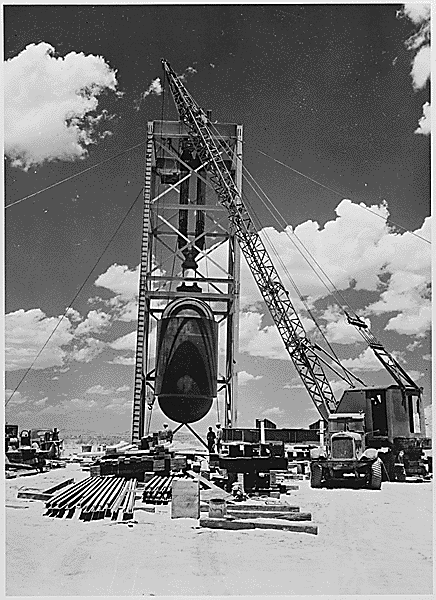


This was taken on july 24th 1943. In this image shows the atomic bomb that the United States constructed. This image is also an example of our power and the power we had.


5 Where Did The Money Go?

This chart shows all the costs for materials and for all of the other costs of the manhattan project. It also tells the amount of money that was spent per year.

(estimated cumulative costs through December 31, 1945)
Site/Project
Then-year Dollars
Constant 1996 Dollars
OAK RIDGE (Total)
$1,188,352,000
$13,565,662,000
K-25 Gaseous Diffusion Plant
$512,166,000
$5,846,644,000
Y-12 Electromagnetic Plant
$477,631,000
$5,452,409,000
Clinton Engineer Works, HQ and central utilities
$155,951,000
$1,780,263,000
Clinton Laboratories
$26,932,000
$307,443,000
S-50 Thermal Diffusion Plant
$15,672,000
$178,904,000
HANFORD ENGINEER WORKS
$390,124,000
$4,453,470,000
SPECIAL OPERATING MATERIALS
$103,369,000
$1,180,011,000
LOS ALAMOS PROJECT
$74,055,000
$845,377,000
RESEARCH AND DEVELOPMENT
$69,681,000
$795,445,000
GOVERNMENT OVERHEAD
$37,255,000
$425,285,000
HEAVY WATER PLANTS
$26,768,000
$305,571,000
Grand Total
$1,889,604,000
$21,570,821,000


This Information found, Here
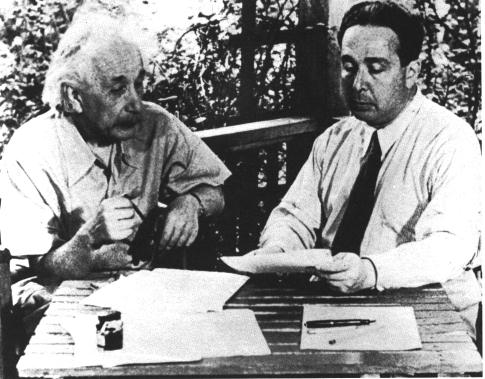

this picture is of albert einstien disscussing the atomic bomb and how it works and how they are going to make it. many sienentist tryed to get premission to resaerch or make an atomic bomb but none of them was sucesful until einstien came and conviced the president and secetary of war to star to construct the atomic bomb.this source is very reliable because one it is a picture and the web site is reliable.
this picture is hound here

over 5ooo men workon the project and many of them hardly know what they were making.


this is a primary scource taken by one of the workers. this picture was taken for people to know what was happening in side the closed doors. i beilve that this source is very reliable because it is a picture and pictures dont usaully lie. the one question that is left unanswered is where is it held this picture is found here
1 Who helped conviced the president and the secratary of war to start to construct the atomic bomb.
2 What was the date on one of the pictures showing them carrying the atomic bomb.
3 About how many poeple worked on the project.


New Weaponry of WWll


Aircrafts were not only essential in the warfares of world war two, but also
very much everyone's number one concern. All the combatant nations, USA, Germany, Japan, Britain, struggled to keep their aircraft up-to-date. Learn more about aircrafts, and what sorts were use for what here.


Tanks were not used often, but they were essential in every important millitary of the wars. This particular tank is two very important weapons of World War II together. The Flame thrower, and Tank. For more information on these weapons click here.


Machine gun such as the browning 0.5" (12.5mm)
and also early air craft cannons like the Hispano 20mm
image found here. These guns were first used in the American Civil War, used in the World War 1 and carried on into world war 2. These guns became very helpful because instead of killing just killing a couple men in a minute.. You could kill up to 600 men in one minute.


Bazooka, also known as the M9 anti-tank Rocket Lancher. Image found here. This Bazooka came into effect in June 1943. This weapon was one of the main weapon used by the United States army.
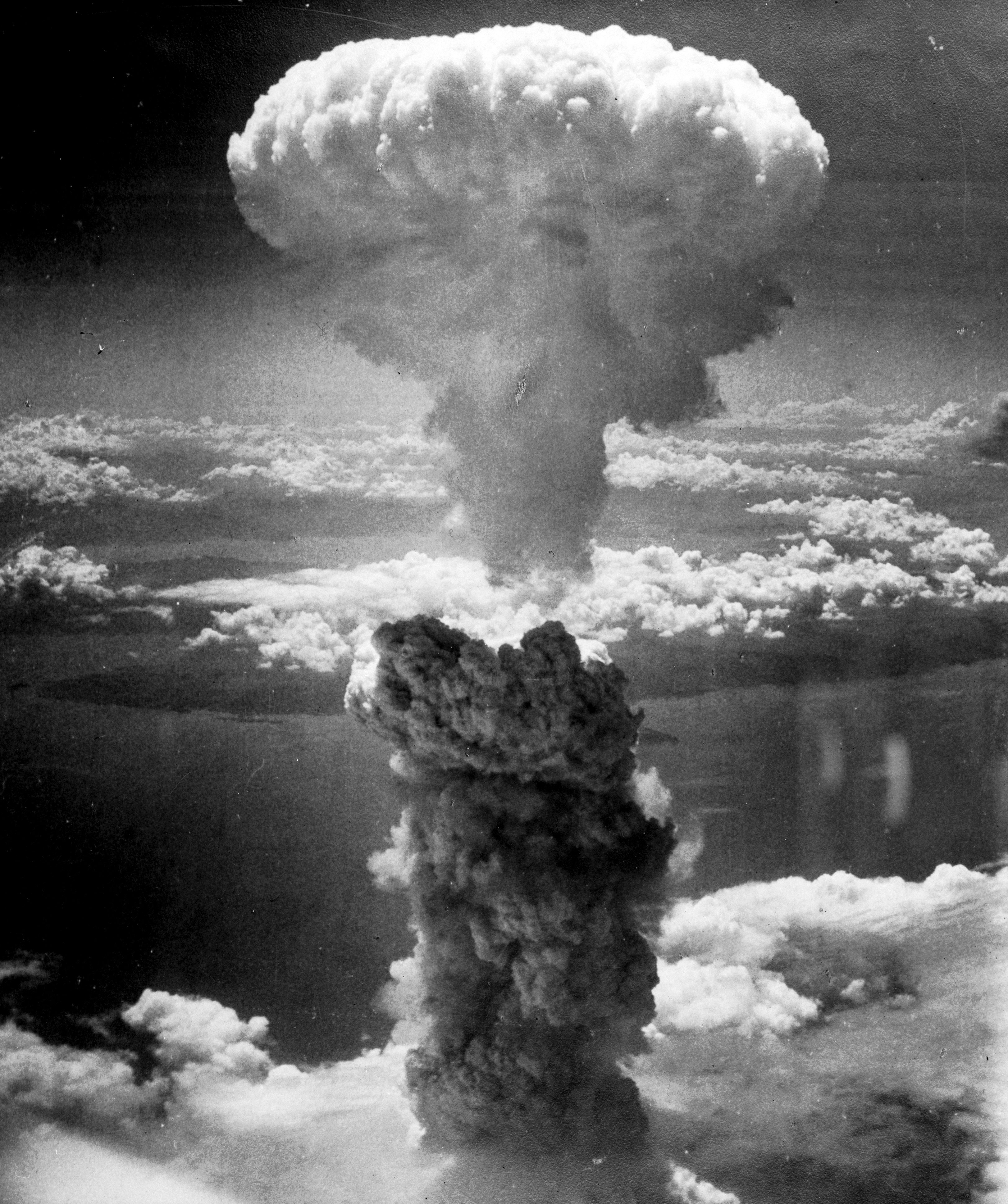


Atomic bomb..Or also know as a nuclear weaponry had a major
effect on the war because it could kill
thousands of people at once.
Image found here.


World War II had a major impact on warfare, and the different ways of taking on the enemey. During the Revolutionairy war, many ways of warfare changed, but in World War II it was mainly weaponry, bringing out the savage in every one of us. Many people were affected by the jump in weapons. Such as Japan, after we bombed them in avengance of Pearl Harbor. Many of the weapons here were very well interconnected, not being able to survive without the other. Aircraft carriers often had machine guns attached, for a much better advantage from air. Like wise, many of the weapons above needed the others to be able to be stratigical with their attacks. Tanks alone, could not take on an entire army.


Hitler and The Nazis

This picture can be found here.


Before WWII this sign of the Swasticka was used for many different religions through the western world. During WWII it was used as the nazis sign and was on there flags and badges they would wear.


This picture can be found here.

This is a picture of the Swasticka trees was found outside of Berlin in 1992. They were planted by one of Hitler's followers in 1937. Swasticka trees are green then turn yellow in the fall. They were removed in 2000. This shows that even after the holocaust there was a lasting impact on the world.


This picture can be found here.


This picture also represents one of the lasting impacts that the nazis and Hitler had on the world. This was built at the Coronado US nazy base in southern California around 1967. Many people debate if it was a accident or not.


Image found here.


This image can be found here.
In 1933 Adolf Hitler came to power in Germany. That lasted until the year of 1945.


Women ande the War Effort (Rosie the Riveter) #1

This advertisement was created . It represents that we as women can do anything and even more than the men can do! The famous saying "We can do it!" was created when Rosie the Riveter first proved that she can do it, she was truly an inspiration to all women around the world!

Labor force for women grew 6.5 million. In 1944, 37% of adult women had jobs. When the war was at its peak, there were 19,170,000 women working.
In 5 years female work forces grew 50%. 1 in 10 women married and entered the work force.


This photo about Rosie the riveter is a perimary source created in 1943 by a famous painter Norman Rockwell.On May,22,2002 Norman rockwell started painting on canvas'es. He painted all different kinds of things, but a real famous painting would be Rosie The Riveter. The peropse of this famous painting is based on the women who had to do the mens work and jobs,while the men are at war in World War ll.

What make this painting so significant is that she was the on who told and said that "Yes We Can!". That indicates that all women could do the same work has men can do and even better. Rosie The Riveter is not a real person but is baste as a womens beleifs. She is almighty and strong, and independent. During the US the americans women had to work in the factories and house work. Why wasn't Rosie The Riveter a real person?. Rosie The Riveter was the most famous women figure you should that all women can do what men can do.

U.S.A. in the pacific (Island hopping campaign)


source
Overview
The United States responded to imperial japans expansion by engaging them in the solomen and guilbert islands. After initil victorys in guadal canal and tarawa the united states would estblish there next base of oporation several islands behind enemy lines. This was desinged to sever lines of supply and communication so isolated japanese bases would wither on the vine.


source

Guadal Canal
Guadal Canal was the first island fought in the solomen island campain. in a six month period the US lost 7000 solders compard to 31000 to the japanese in pitched landl, air and sea battes.


Philippines
may 1942 Mcarther vows to return to the philippines. 1944 Mcarther returns to rescue the men that he surrenderd to the japanese in 1942. the campain for the philippines lasted from 20th of October 1944-2nd of september 1945.
source


so


source
IWO JIMA

As Tom clancy put it "Iwo Jima was the last darnd 8sq mile peice of land standing bettween the united states and japan" or somthing to that effect. iwo jima was a defining moment for the marines.110,000 marines where sent to iwo jima .the raising of the flag ment 500 more years of marines.

Women and the War Effort (Rosie the Riveter) 2

This photo about Rosie the riveter is a perimary source created in 1943 by a famous painter Norman Rockwell.On May,22,2002 Norman rockwell started painting on canvas'es. He painted all different kinds of things, but a real famous painting would be Rosie The Riveter. The peropse of this famous painting is based on the women who had to do the mens work and jobs,while the men are at war in World War ll.

What make this painting so significant is that she was the on who told and said that "Yes We Can!". That indicates that all women could do the same work has men can do and even better. Rosie The Riveter is not a real person but is baste as a womens beleifs. She is almighty and strong, and independent. During the US the americans women had to work in the factories and house work. Why wasn't Rosie The Riveter a real person?. Rosie The Riveter was the most famous women figure you should that all women can do what men can do.

Japanese Internment Camps

During World War 2, many Americans hated the Japanese imigrants after Pearl Harbor. (This photo can be found HERE.) Supposedly taken in 1941, the picture to the right shows the strong desire for Japanese persons to be eliminated from the streets for "national security," and people of Japanese decent, or in any way Japanese, were said to be a "threat." The world today can see how ridiculous things were back then, just by looking at this picture. The woman pointing to the sign above says that she agrees with the sign, she's afraid of Japanese imigrants, and that she doesn't want them there; as were many American citizens thinking the very same thing. After Pearl Harbor, the Japanese were hauled off to internment camps, away from the rest of the world in order to keep peace, and ensure safety. Many innocent people went to these camps, and treated horribly, even though they plead not guilty in their examinations.


(This photo can be found HERE.)

Mr. Ansel Adams, a famous American photographer of the period, went to Manzanar War Relocation Center documenting what was happening there with the Japanese-Americans interned there in California. This young man was captured on film in his daily life in 1943. You can see the vast landscape behind him, making it known that camps were far away from any other civilization.


Topaz Internment Camp located in Utah, held 8,000 people when it was at large. In the camp there was an elementary school, a high school, administration buildings, warehouses and multiple other necessary buildings, such as latrines for men and women, were constructed within the 42-block area. The interned families lived in barracks on the rest of camp site. Designed as apartments, each fit families of two and four easily; some larger families were permitted to live in two rooms of the building. Each room was heated by a coal stove, but cooking in the apartments was discouraged. The only furniture they were given were army cots, mattresses, and blankets, although some families constructed a table out of scraps from the other constructions previously built.
Each family was given jobs in the camp, like doctors and other people with such skills. Those employed individuals were given a wage ranging from $16.00 to $19.00. Some were given passes to go to Delta, a nearby town, and found employment there. On January 29, 1943, President Roosevelt made a public announcement that Japanese-Americans were now allowed to volunteer for a combat unit. (This information can be found HERE.)


Miss Breed, a librarian in San Diego, was one of the many Americans against the internment camps. She got to know many of the children who were taken away to stay in the camps with their families. At the train station, before the kids got on, she handed out self addressed postcards and letters, encouraging them to write to her. The letters were just like any other letter you would write to a friend. They told of every day life; talking about classes, family, and extracurricular activities. The letters not only told of the injustice and punishment of living in an internment camp, but of life in the 1940's for the teens who had to make a life there.(One of such letters can be found HERE.)

Some of the younger kids played "Post Office" to entertain themselves. Writing letters to Miss Breed was probably one of the reasons they had the idea to play the game. (This photo can be found HERE.)


Although some Japanese-Americans interned in the ten camps located throughout the USA were treated quite well, most weren't. One anonymous individual gave their view of the internment camps. You can imagine how trapped and intimidated you would feel looking out towards the open land that you weren't allowed to go onto, through a fence with barbed wire wrapped thouroughly around it, a floodlight scanning the grounds constantly throughout the night, and sentries with machine guns sitting in nests along the fence.

(This poem can be found HERE.)

This letter can be found here.

"Dear Miss Breed" letters were sent from occupants from Japanese - Americans inside interment camps to Miss Breed. This letter was written by a ten - year old girl, Fusa Tsumagari, it describes her journey of finding her family while in a camp, with the help of Miss Breed.

These photos can be found here.

The pictures to the left show the hardships children had to go through while trapped at the interment camps. Many children in the camps were separated from family members and left to survive on their own. Children attended schools, that were very poorly equipt and the schools usually didn't have insulation until well after the schools were opened. One student recalled learning a whole years worth of chemistry in one week.


This cartoon can be found here.
The cartoon to the left drawn in March 1942. The artists name was just Rodger. It appeared in the San Fransisco News March 6,1942. It represents the Japanese Americans being "shipped" off to Interment camps all over the country. To ensure American safety after the pearl harbor bombing anyone being affiliated to Japanese heritage was shipped off.


This image can be found here.
The owner of this grocery store was Japanese - American. He put up this banner the after the Pearl Harbor bombing. This picture taken ,by Dorothea Lange, in March 1942 right before he was taken to a camp. The words on the banner read "I am an American" probably strewn to show his national pride for his home country.


"... these people are living in the midst of a desert where they see nothing except tar paper covered barracks, sagebrush, and rocks. No flowers, no trees, no shrubs, no grass. The impact of emotional disturbance as a result of the evacuation . . . plus this dull, dreary existence in a desert region surely must give these people a feeling of helplessness, hopelessness, and despair which we on the outside do not and will never fully understand." - Arthur Klienkopf, Superintendent of Education-Minidoka Relocation Center Relocation Center Diary . This diary entry can be found here.
The relocation superintendent in northern Idaho, in 1942, wrote the above quote in his diary. In the entry he describes the hardships of the life in interment camps. You can tell he felt pity, sympathy, and guilt for the Japanese - American prisoners. Arthur Kliendopf worked as the relocator in the Minidoka Relocation Center, the interment camp.


After the Pearl Harbor bombing on Dec. 7, 1941 any person having any affiliation to Japanese heritage was sent off to an interment camp. These camps were much like the concentration camps the Germans used to hold and kill the Jews. Families were separated, children poorly cared for and taught, malnutrition, illness, and cramped living areas are only some of the trials these people had to face. Over 120,000 legal American citizens were shipped off to different camps all over the country and even in Canada, 10 camps total. The police usually sent a notice declaring you had 48 hours to pack all your necessary belongings and then they would pick you up, throw you into a car or train and take you to a new unknown place, usually separated from your family and people you know. The temperatures in the camps were unbearable, many were in the desert with 100 degree weather in the summer and 30 and below in the winter. Due to poor medical care, low food supply, heat, and American military guards many people died in the camps. Americans failed to see the light, they didn't realize the injustice and criminal like way these people were treated, none of the prisoners had ever done any form of illegal act, until 50 years later. In 1988 Congress passed the "Civil Liberties Act" or "Japanese Redress Bill", which sent $20,000 and a signed apology letter from the President for reparations to every single inhabitant of an internment camp. These "reparations" were finally finished in 1998. Even though the interment camps have all gone deserted, the pain, loss, and suffering these people went through will live within them and there loved ones forever.
* A list of these 10 camps with information can be found here.


Questions:
1. Why were Japanese - Americans taken to internment camps?
2. What was life like living in an internment camp?
3. What happened to camp inhabitants years after the camps were liberated?
4. How big was Topaz?
5. Who was the librarian who wrote to the interned children?
6. What made the fence so intimidating?


Bibliography:
Life in Japanese Interment Camps. Feb 28, 2008. http://library.thinkquest.org/TQ0312008/resources.html.

Children of the Camps. Satsuki Ina. 1999. Feb 28, 2008.
http://library.thinkquest.org/TQ0312008/resources.html.